Fluid Finance — Investments
Background
Fluid Finance SA was a Swiss fintech startup founded in 2021
and headquartered in Geneva, Switzerland. It was a bank alternative linked
to a Web3 wallet, aiming to bridge traditional banking with cryptocurrency
in a single app.
and headquartered in Geneva, Switzerland. It was a bank alternative linked
to a Web3 wallet, aiming to bridge traditional banking with cryptocurrency
in a single app.
Company offered:
- Multi-currency wallets and debit cards
- International money transfers
- Investments into digital assets
- P2P crypto/fiat marketplace
- A proprietary on-chain stablecoin called DUSD (Digital Dollar),
letting users move money between bank accounts and crypto wallets
Context
We introduced an Investments section to shift the product from a transactional utility to a long-term financial platform. At the time, user behavior was primarily
one-off (send/receive), limiting both engagement and revenue potential.
To address this, we focused on enabling ongoing financial activity within
the product.
one-off (send/receive), limiting both engagement and revenue potential.
To address this, we focused on enabling ongoing financial activity within
the product.
Product goals
- Give users an ability to buy Fluid Token — the company's main asset, which was issued specifically to give users the opportunity to invest under favorable conditions.
- Increase user lifetime value by encouraging users to hold and grow assets within the platform, rather than treating it as a pass-through wallet.
- Create recurring engagement loops — portfolio tracking, price changes,
and performance insights drive habitual usage and return visits. - Unlock monetization at scale — investment actions (trading, staking) introduce sustainable revenue streams tied to user activity.
- Lower the barrier to entry — simplifying complex crypto concepts into clear portfolio views and guided actions enables broader adoption.
My role in the project
As the product designer on this project, I was responsible for leading
the end-to-end design of the Investments section, from defining
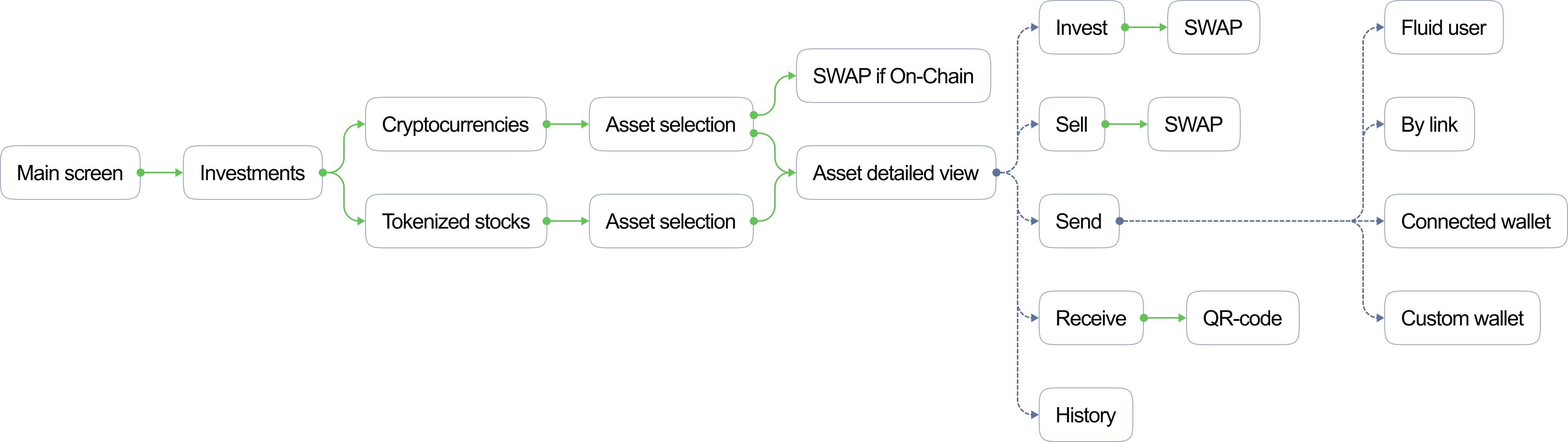
the information architecture to shaping the user experience and interface.
the end-to-end design of the Investments section, from defining
the information architecture to shaping the user experience and interface.
⚠️ Important note
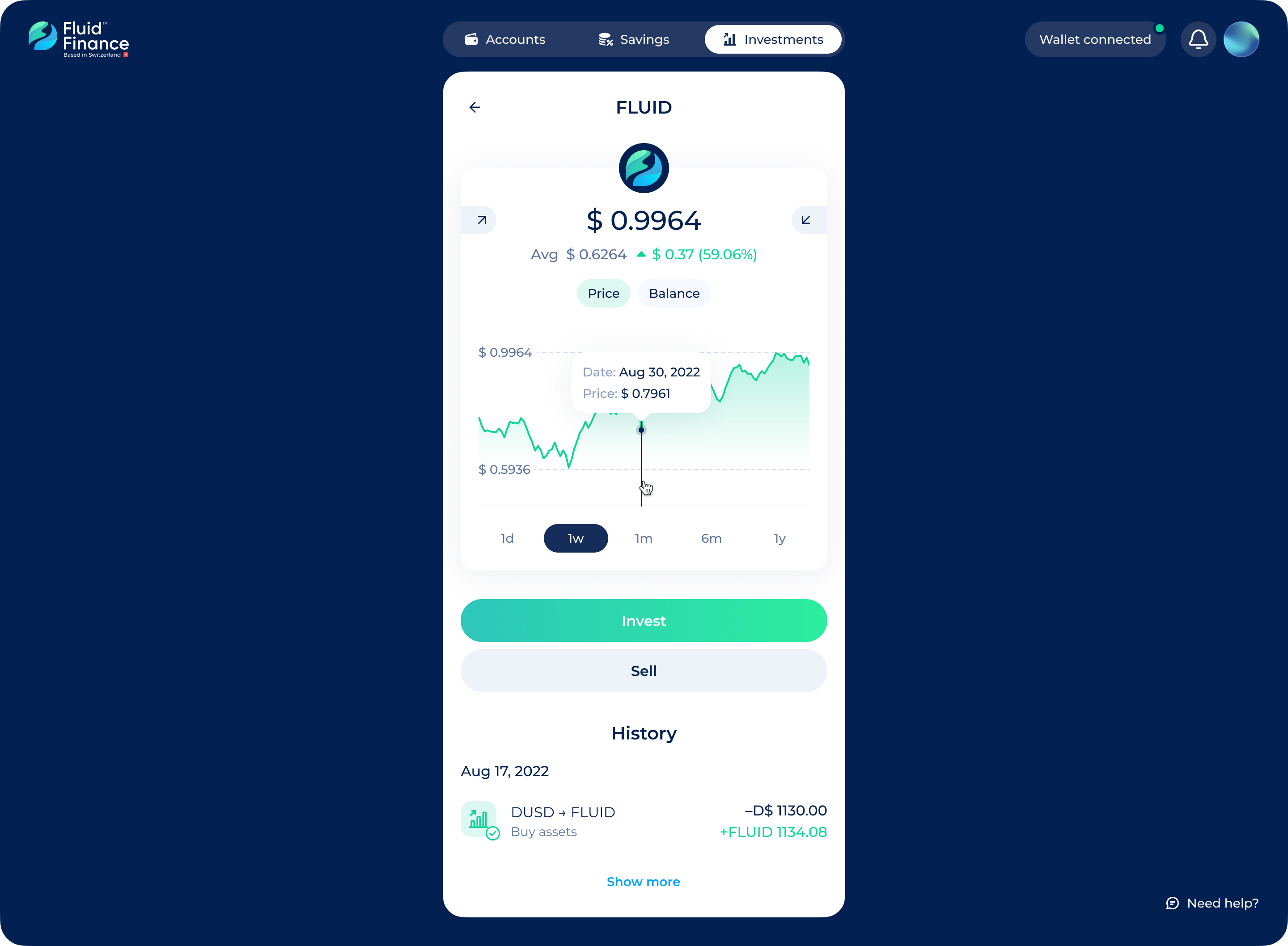
To further understanding of the final user interface design, it's important to note
that the app was initially designed vertically to make it easier for developers
to adapt the design to smartphone browsers.
that the app was initially designed vertically to make it easier for developers
to adapt the design to smartphone browsers.
Process
With business analysts in our team we created list of requirements based
on users needs. It helped us to simplify feature descriptions in order to focus
on what user need and why instead of just technical deatils of the interface.
on users needs. It helped us to simplify feature descriptions in order to focus
on what user need and why instead of just technical deatils of the interface.